Could the Solar Storm That Shook the Telegraph Age Shake Ours Too?
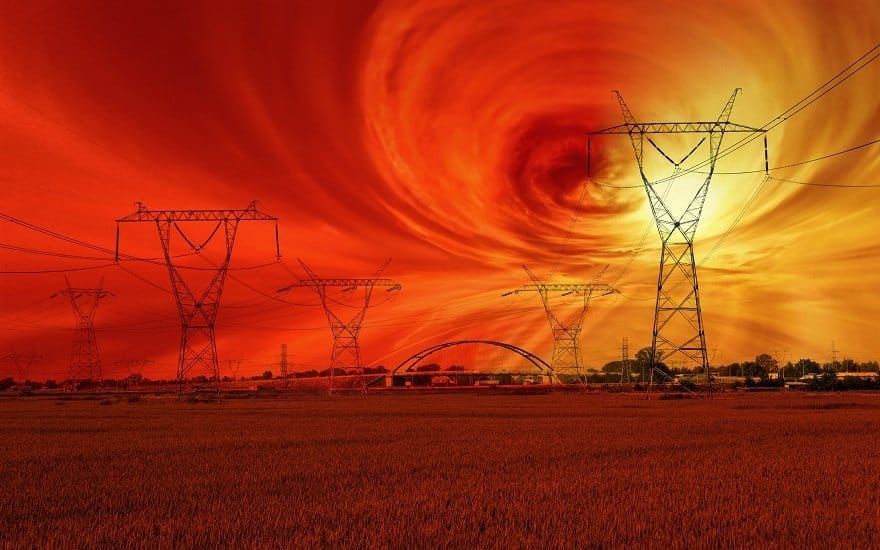
On September 1, 1859, the Sun unleashed the most powerful geomagnetic storm ever recorded, setting telegraph wires ablaze and painting auroras as far south as the tropics. It's happened before and it could happen again and next time, we have far more to lose..

How a routine morning of sunspot sketching became a landmark moment in astronomy
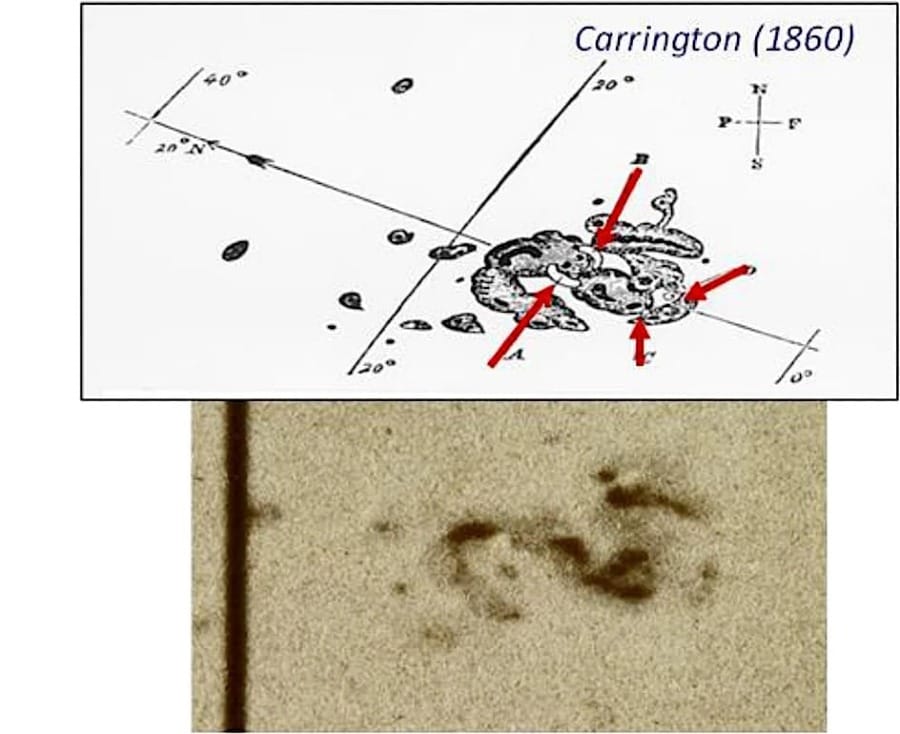
On the morning of September 1, 1859, English astronomer Richard Carrington was sketching a large, complex sunspot group from his private observatory near London, using his telescope to project an 11-inch image of the Sun onto a screen — the standard, safe way to observe solar features at the time. Around 11:18 a.m., two patches of intense white light flared within the group, brighter than the surrounding solar surface.
Carrington had never seen anything like it and within about five minutes the flare faded and he stepped away to fetch a witness not realising what he had just recorded. Fascinatingly, another British astronomer, Richard Hodgson, independently saw the same flare; together their reports produced the first documented solar flare in history.
A CME raced toward Earth in record time, unleashing chaos in the sky
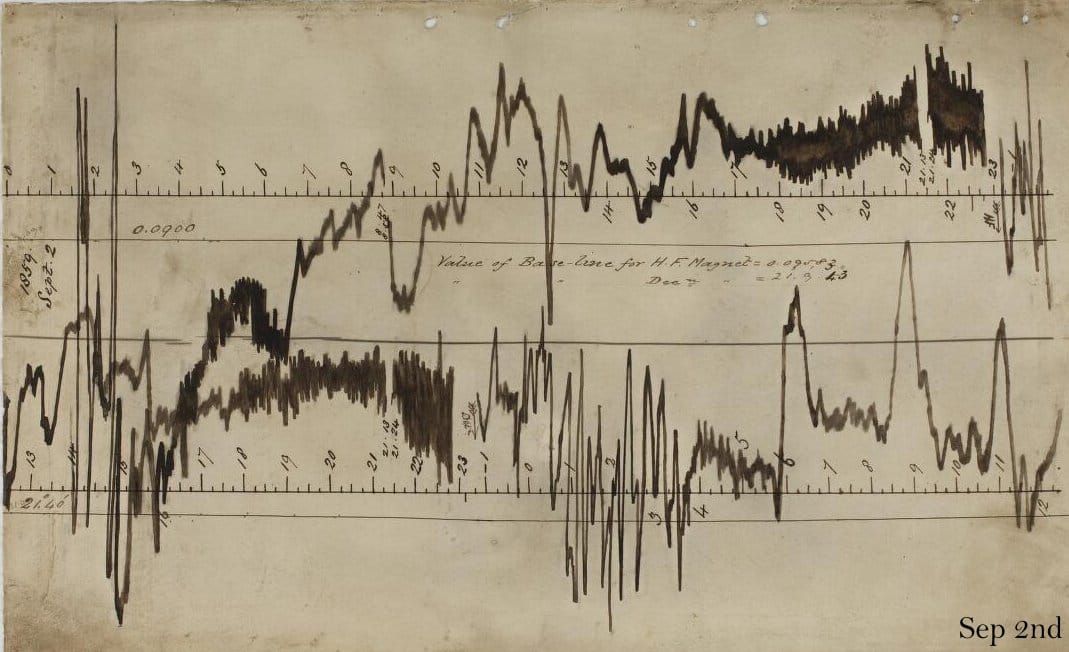
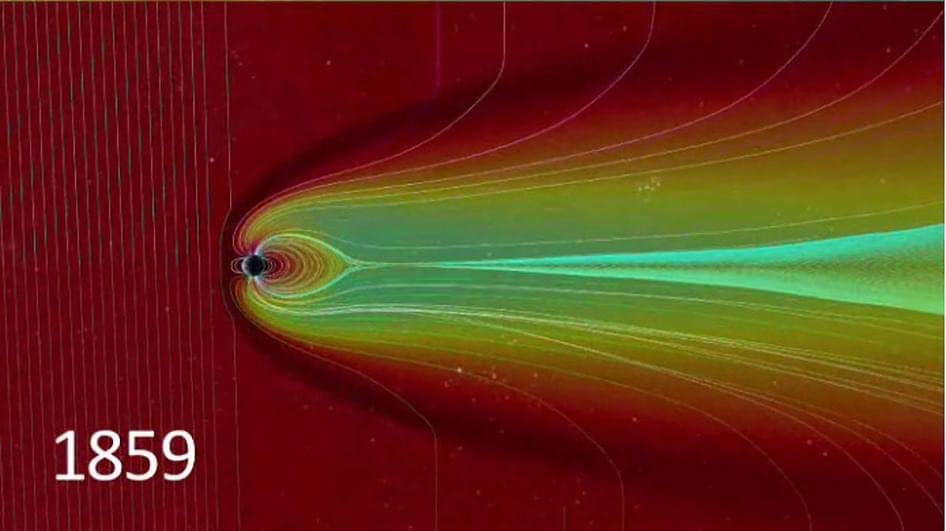
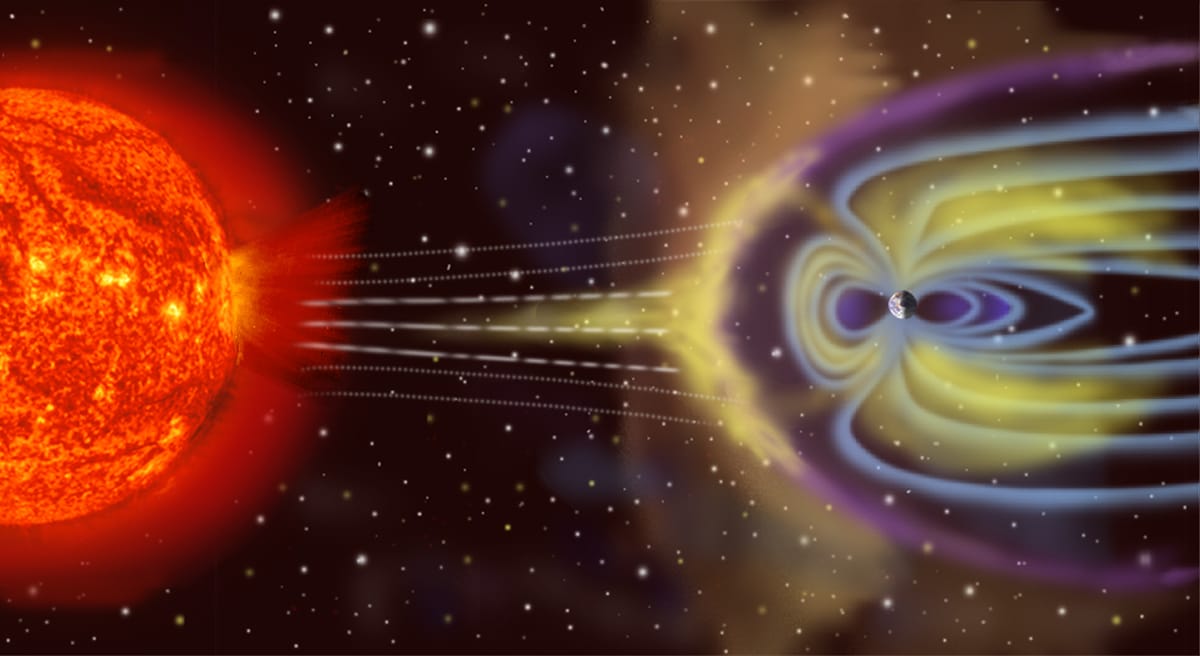
Less than a day later, the Sun's other shoe dropped; a coronal mass ejection (CME), a huge cloud of magnetised plasma, slammed into Earth's magnetic field. Most CMEs take two to four days to make the trip. This one took roughly 17 hours, a sign of how fast and energetic it was. The impact was recorded by the magnetometer at London's Kew Observatory, whose needle, suspended on a silk thread, began swinging wildly as the storm hit.
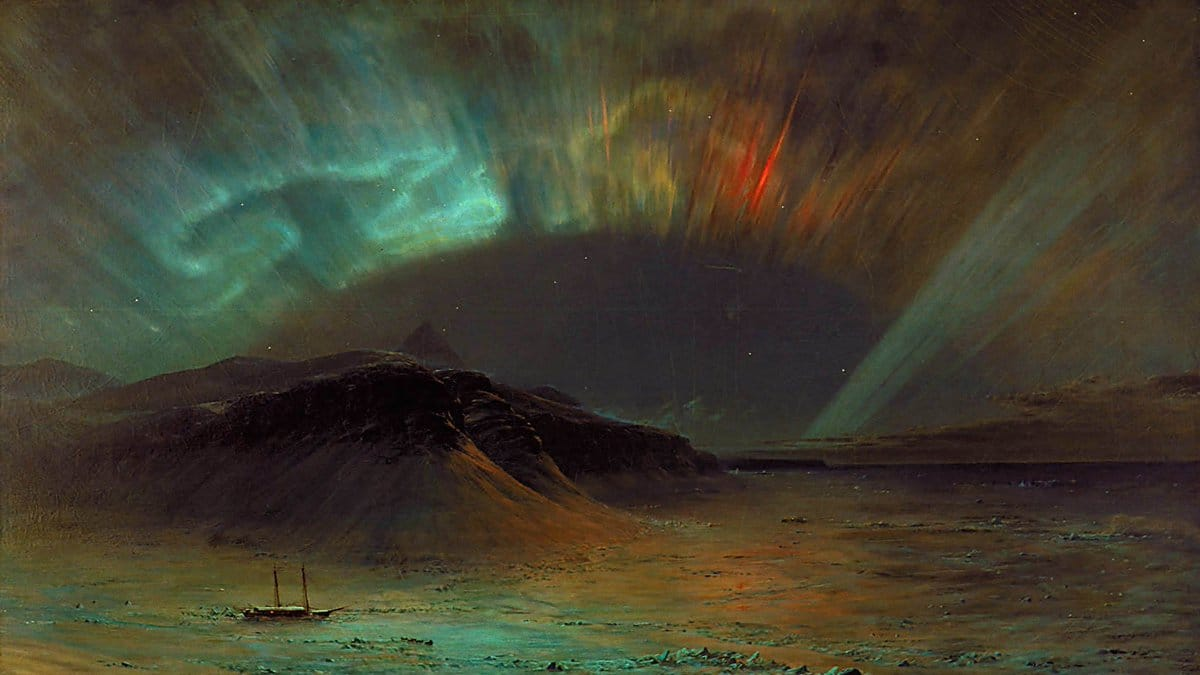
The geomagnetic storm that followed this sequence of events remains the most intense on record. Auroras were reported across the globe, well into the tropics, including places like Cuba, Hawaii and Colombia. Newspaper accounts describe skies glowing red and green so brightly that people could read print at night. In the Rocky Mountains, some gold miners reportedly woke and began preparing breakfast, believing dawn had come.
The most dramatic effects hit the technology of the day: the telegraph. Induced currents surged through the wires and operators reported sparks leaping from equipment, electric shocks and scorched paper. Some systems failed outright and in a few cases, operators disconnected their batteries and kept communicating on the current induced by the aurora alone.
Estimating a storm from 1859 is hard, since there were no satellites and only a handful of ground magnetometers. Kew Observatory's instruments in the United Kingdom recorded a magnetic disturbance coinciding with the flare and later analyses of magnetic records suggest the storm's strength rivaled or exceeded anything measured since. Estimates of the flare itself vary widely, with some studies placing it around X45 on the modern scale, though the uncertainty is large. Ice-core nitrate spikes were once used as evidence of the storm's size but that approach has since fallen out of favor.
From Quebec's blackout to GPS chaos in the cornfields as recent storms show we're not immune
A Carrington-class storm is not a once-in-history fluke. On July 23, 2012, a CME of comparable speed and power erupted from the Sun and crossed Earth's orbit, but Earth was not there. It missed by about nine days of orbital travel and it was recorded by NASA's STEREO-A spacecraft. Researchers have suggested that had it hit, the result could have been Carrington-like. We also have modern examples of smaller storms causing real damage.
In March 1989, a geomagnetic storm collapsed Quebec's power grid in about 90 seconds, leaving millions without electricity for around nine hours in Canada. Furthermore, in May 2024, the strongest storm in two decades pushed auroras deep into the mid-latitudes and disrupted GPS-dependent precision farming, though the grid largely held in the United States and most parts of Eastern Europe.
A study analysing GPS receiver data found position errors reaching up to 70 metres in the Central United States during the storm's main phase, with a further 10 to 20 metre offset recorded in the Southwestern United States due to storm-enhanced plasma density.
What Would a Repeat Look Like Today?
A Carrington-scale event would meet a world far more dependent on electronics than the telegraph era. The main concerns span several interconnected systems. Power grids face the risk of induced currents overheating and damaging high-voltage transformers, some of which take months to replace. Satellites could suffer from increased drag and radiation, degrading or disabling spacecraft and affecting GPS, communications and weather forecasting. Aviation and radio systems are likely to experience high-frequency radio blackouts and polar route disruptions and the economic toll could be substantial, with studies estimating losses ranging from hundreds of billions to trillions of dollars, depending on assumptions about grid damage and recovery time.
Most of the world is somewhat better prepared today than it was in 1859 or even 1989. Spacecraft such as NOAA's DSCOVR and NASA's ACE keep watch on the solar wind upstream of Earth, giving utilities and satellite operators at least tens of minutes of advance warning. Forecast agencies issue watches and alerts and grid operators have since learned how to reconfigure their networks mid-storm. Even so, a fast-moving CME leaves little lead time, and protective infrastructure remains unevenly distributed across the globe. Estimates of how often Carrington-scale storms occur vary widely, with published figures putting the odds at a few percent per decade, though the uncertainty around that number is considerable.
What's beyond dispute is that the Sun is capable of producing such an event again and that modern society now has far more at stake than the telegraph operators of 1859 ever did.
Why This Matters for Kenya and Africa
For Kenya and the wider African continent, the Carrington Event is not just a historical curiosity, rather it's a warning worth heeding now. Much of Africa's power grid, telecommunications and GPS-dependent agriculture and aviation infrastructure remain under-monitored for space weather risk, with limited access to real-time solar activity data and few dedicated forecasting or early-warning systems. As economies across the continent grow increasingly reliant on satellite communication, mobile banking networks and precision farming; the potential losses from an unforecasted Carrington-scale storm would be severe and difficult to recover from quickly. Investing now in space weather monitoring, regional forecasting capacity and resilient grid infrastructure is far cheaper than rebuilding after the fact. The question is not whether another extreme solar storm will happen but whether Africa will be ready when it does.
Sources for further reading: Cliver & Dietrich (2013) on the flare's magnitude, the National Academies' 2008 report on severe space weather events and NOAA's Space Weather Prediction Center.